The right workout changes with you: which one is best?
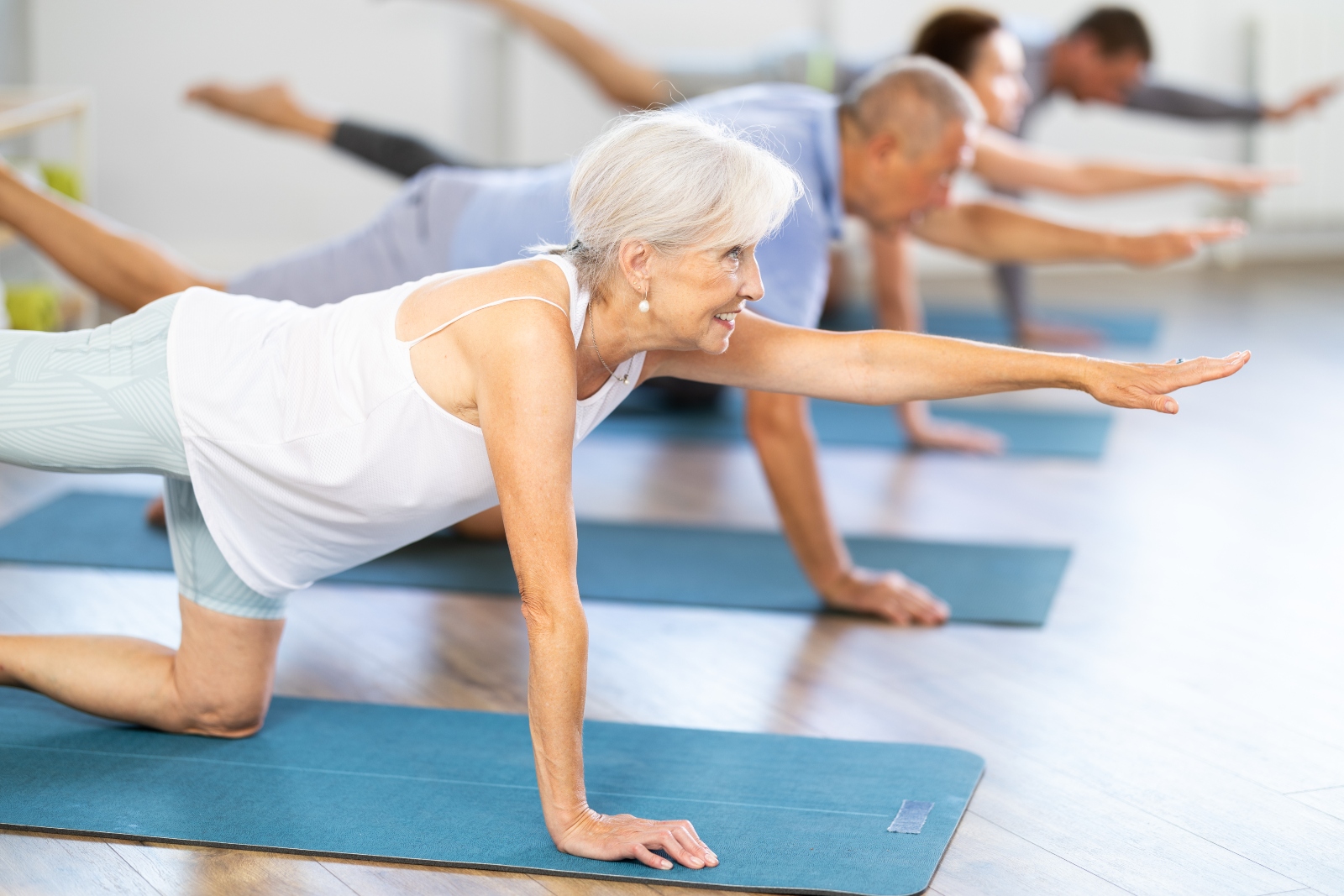
The right workout changes with you: find out why you shouldn’t always do the same activity. Over the course of our lives our body, our energy, our metabolism and our desires change. That is why it is important to become aware of these changes and choose the physical activity that suits you. What matters is practising it throughout your life.
The body you had at 25 is not the same one you have at 40, and it will not be the same at 60. Hormones, metabolism, sleep quality, stress levels and muscle mass all change. Yet many of us keep doing the same type of workout for years, out of habit or because “it has always worked”. The problem is that the right movement for you today may not be the right one for you in a few years, or even in a few weeks, depending on how you feel.
The real key to active longevity is not finding “the perfect workout”, but learning to listen to your body and adapt movement to what it needs at that moment. The goal never changes: to keep moving throughout your life. Only how changes.
When you need energy: HIIT and high-intensity training
There are periods when you feel charged, you want to push, to sweat, to feel your heart pumping. At those times high-intensity interval training (HIIT) is a powerful tool: it not only burns calories in a short time, but literally trains your cells to produce energy more efficiently. Some recent studies have observed that after a few weeks of HIIT the mitochondria of muscle cells, the body’s true “power plants”, not only increase in number but also change their internal structure so as to produce energy more effectively, and this effect has also been found in people with overweight or type 2 diabetes, which shows that the capacity for muscle adaptation remains intact even in less favourable conditions.
This type of training also increases the body’s ability to burn fat as a source of energy, thanks to improved mitochondrial function and an increase in the enzymes involved in lipid oxidation.
Be careful, though: HIIT is powerful but must be dosed. It is not the right workout when your body is already under chronic stress: in those cases it can even raise cortisol levels further instead of helping you.
When you need calm, centring, recovery: Yoga and Pilates
There are other moments, perhaps after an intense period at work, a period of poor sleep, or simply a more stressful phase of life, when the body does not need to be pushed but to be listened to and regenerated. In these cases, Yoga and Pilates become the right tools.
A systematic review with meta-analysis of randomised studies showed that practices including yoga asanas significantly reduce evening and morning cortisol, systolic blood pressure, resting heart rate and even fasting blood sugar and cholesterol. A more recent meta-analysis, which compared different training modalities for reducing cortisol in people with psychological distress, found that yoga has the most marked effect of all the modalities tested, followed by Qigong and multicomponent training, while, interestingly, HIIT tended to slightly increase cortisol. The same study also observed that the relationship between exercise dose and benefit is not linear: there is an optimal point beyond which the benefit no longer increases.
Pilates also has a specific role: its emphasis on controlled movements, postural alignment and conscious breathing makes it particularly useful for reducing the feeling of mental fatigue and regaining a sense of mastery over one’s body, an aspect which, according to some research, has a statistically significant impact on reducing anxiety symptoms, even before the physical component.
When you need to build and maintain: strength training
Then there is a component that should never be missing, regardless of the phase of life and the mood of the moment: strength training. From the age of 30, we physiologically lose about 3-5% of muscle mass per decade, a decline that accelerates after 60, a phenomenon known as sarcopenia, which is one of the main drivers of frailty, falls and loss of autonomy in older people.
The good news is that this process is not inevitable. Resistance training is recognised as the most effective way to build and maintain muscle mass at any age, and recent analyses link any amount of strength training to a reduction in all-cause mortality risk of about 15%, with a benefit that increases further when combined with cardiovascular activity. It is also interesting that muscle is not just “the mechanics of movement”: it works as a true endocrine organ, releasing during contraction signalling molecules (myokines) that communicate with the rest of the body.
Here too, less does not always mean worse: according to some research, the greatest benefit is already seen with 30-60 minutes of strength work per week, with diminishing returns beyond this threshold, a useful fact for those who fear they “don’t have time”.
How to choose the right workout, moment by moment
There is no hierarchy among these activities: none is “better” in absolute terms. They are different tools for different needs. A simple way to find your bearings is to ask yourself, before training, how you really feel:
- Do I have energy to spare and want to push? → HIIT, intense cardio training, team sports.
- Am I stressed, sleeping badly, feeling overwhelmed? → Yoga, Pilates, walking, mobility.
- Do I want to stay strong, independent and healthy over time? → Strength training, 2-3 times a week, regardless of everything else.
- Am I going through an important life change (a new job, menopause, an injury, parenthood)? → It is time to reassess your whole programme, not just to “push harder” or “rest more”.
Consistency does not mean repetition
The real secret of active longevity is not the rigidity of a fixed programme, but the ability to keep moving while adapting. A body that changes deserves a workout that changes with it. The only constant should be the habit of movement, not the form that movement takes.
Bibliography
- Bhattacharyya, K.K., Liu, Y., Fauth, E. (2023). Yoga, Tai Chi, and Pilates and Family Caregivers’ Subjective Well-Being: Findings from MIDUS. Innovation in Aging, 7(Suppl 1). DOI: 10.1093/geroni/igad104.2528
- Pascoal, T.A. et al. Yoga, mindfulness-based stress reduction and stress-related physiological measures: A meta-analysis. Psychoneuroendocrinology, ScienceDirect.
- The Optimal Exercise Modality and Dose for Cortisol Reduction in Psychological Distress: A Systematic Review and Network Meta-Analysis. PMC, 2025.
- Vasconcelos, F. et al. A Yoga and Compassion Meditation Program Reduces Stress in Familial Caregivers of Alzheimer’s Disease Patients. PMC3652205.
- University of Southern Denmark study (2026) on HIIT training and structural changes in muscle mitochondria — reported on earth.com.
- Obesity, HIIT and mitochondrial-associated indices: systematic review and meta-analysis, IMR Press, Frontiers in Bioscience-Landmark, 28(11).
- Melov, S., Tarnopolsky, M.A., Beckman, K., Felkey, K., Hubbard, A. (2007). Resistance Exercise Reverses Aging in Human Skeletal Muscle. PLoS ONE, 2(5): e465. DOI: 10.1371/journal.pone.0000465
- Giallauria, F., Cittadini, A., Smart, N.A., Vigorito, C. Resistance training and sarcopenia. Monaldi Archives for Chest Disease. DOI: 10.4081/monaldi.2015.738
- Strength Training and Longevity: What the Research Says — literature summary on muscle strength, sarcopenia and mortality.
This article is for information purposes only. It does not replace individual medical advice.