Whole-body cryotherapy in an electric cryosauna: what controlled cold can do for recovery, inflammation and longevity
In brief
- Whole-body cryotherapy exposes the entire body, for a few minutes, to intense and controlled cold. The aim is not to “cure” a disease, but to trigger a physiological response of adaptation linked to recovery, modulation of inflammation and perceived well-being.
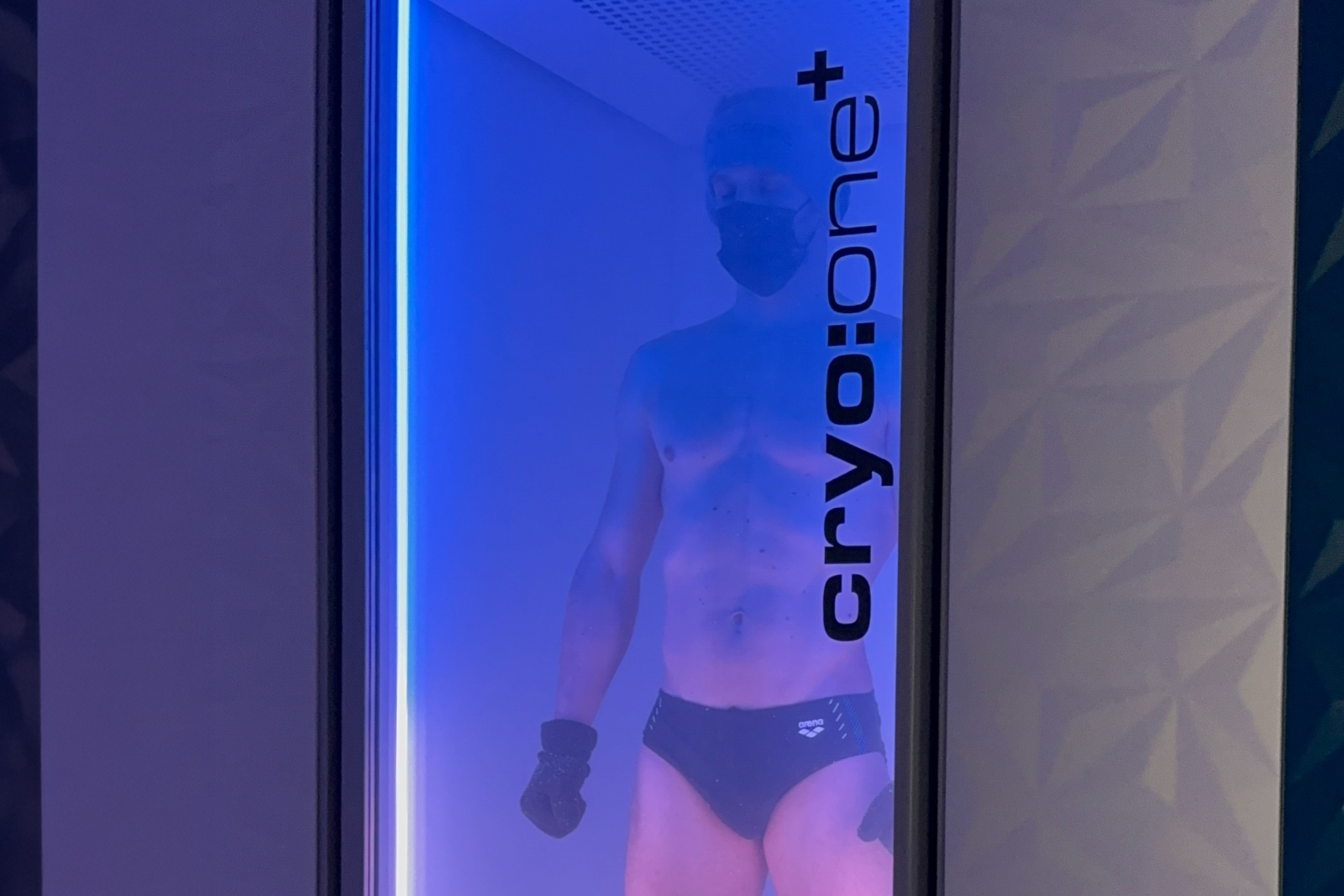
- At our centre in Abano Terme the treatment takes place in an electric whole-body cryochamber, dry and nitrogen-free, with exposures of about 3-5 minutes at temperatures between -80°C and -90°C, head included.
- It is a technology different from the so-called nitrogen “cryosauna”, in which the head stays outside and the cold is generated by nitrogen vapours: a distinction that matters for the uniformity of exposure and for safety.
- The strongest evidence concerns post-exercise recovery, the reduction of perceived muscle pain and the modulation of some inflammatory markers; evidence on sleep, mood and stress is more promising but still preliminary.
- From a longevity perspective, cryotherapy is not an isolated “cure”, but a hormetic stimulus to be included in a personalised pathway, after an eligibility assessment. Contraindications must be known and respected.
Why I decided to write this article
People who ask me about cryotherapy in my clinic almost always come with some expectation already formed: some have seen it used by a professional athlete, some have read about it as an anti-ageing remedy, others are simply curious about the idea of stepping into a chamber at -85°C. As with GAE and other tools of longevity medicine, I have realised that the problem is not the complexity of the technique, but the noise that has built up around it.
On one side there are those who present cold as a panacea able to burn fat, rejuvenate and cure every ailment; on the other, a scepticism that dismisses it all as a wellness-centre fad. The truth, as often happens, lies in the middle and is more interesting than both caricatures. What you read below comes from two sources: peer-reviewed scientific literature and what I observe in the patients I follow in the longevity pathway.
What whole-body cryotherapy is
Whole-body cryotherapy is a procedure that exposes the body to very low temperatures for a short time, in the order of a few minutes. In the version we use, the treatment takes place in an electric cryochamber that is completely dry and nitrogen-free, with uniform cooling that involves the whole body, head included.
This detail is not marginal, because not all cold technologies are equivalent. An international safety review distinguishes true whole-body cryotherapy, in which the entire body, head included, is exposed to breathable cold air in a cryochamber, from partial-body cryotherapy or “cryosauna”, where the head stays outside and the cold may be generated by nitrogen vapours (Legrand et al., Eur J Med Res 2023). In everyday language people often speak generically of a “cryosauna”, but the technical difference has concrete consequences for the uniformity of exposure and for safety.
How it works: cold as a stimulus, not as an anaesthetic
The physiological rationale of whole-body cryotherapy is the same principle that guides much of longevity medicine: hormesis. A short, intense and controlled stress pushes the body to strengthen its own defences, exactly as intermittent fasting, intense physical activity or exposure to sauna heat do. In the case of cold, exposure activates a response involving the neuroendocrine system, peripheral circulation and inflammatory mediators.
The effect is therefore not simple analgesic “numbing”. A review published in Frontiers in Physiology describes whole-body cryotherapy in athletes as a genuine “adaptation therapy”: repeated thermal shock over the whole body surface induces reactions in the autonomic, endocrine, circulatory and neuromuscular systems, with documented anti-inflammatory, analgesic and antioxidant effects (Lombardi, Ziemann, Banfi, Front Physiol 2017). The same literature stresses that fat mass and baseline fitness level influence the effectiveness of cooling, which explains why the response varies so much from person to person.
What science says: the areas with the strongest evidence
I focus on the areas where the literature is most consistent and which I encounter most often in my daily work. I do not go beyond the available data, and where the evidence is still uncertain I say so.
Muscle recovery and post-exercise pain
This is the most studied area. The most convincing effects concern subjective recovery, the perception of muscle pain (so-called soreness, or DOMS) and post-training well-being (Lombardi et al., Front Physiol 2017). A meta-analysis comparing different cryotherapy modalities found broadly similar effects of whole-body and partial-body cryotherapy on muscle performance, DOMS and markers of muscle damage, in studies of overall moderate methodological quality (Azevedo et al., J Clin Med 2022). The correct reading is this: the benefit on the experience of recovery is real, while on some objectively measured functional parameters the results are more nuanced. This is why it should be included in a programme, not used as an isolated gesture.
Chronic low-grade inflammation
This is the point of greatest interest for longevity medicine. A 2025 meta-analysis of eleven randomised studies concluded that whole-body cryotherapy can reduce the inflammatory response in the human body, acting on certain serum mediators (He et al., Sci Rep 2025). Even more interesting from a preventive point of view, a 2024 pilot study in healthy adults showed a reduction in high-sensitivity C-reactive protein (hsCRP), a marker of systemic inflammation associated with cardiometabolic risk, suggesting that the benefit does not concern only patients who are already ill (Chun et al., Interact J Med Res 2024). Results remain heterogeneous across studies, temperatures and number of sessions, but the direction is consistent.
Sleep, mood and perceived stress
Here the evidence is promising but still preliminary, and must be communicated as such. One study showed that three minutes of evening cryotherapy after training improves sleep quality in physically active men, with a reduction in night-time movements (Douzi et al., Eur J Sport Sci 2019). On the psychological side, a PRISMA meta-analysis found preliminary evidence of the effectiveness of cryotherapy as an add-on treatment for mood disorders, particularly depressive ones, while highlighting the need for larger studies (Doets et al., Complement Ther Med 2021). These are not “cure” figures, but consistent signals that, within a structured pathway, have value.
Longevity and ageing
This is the framework in which I place this tool. Chronic low-grade inflammation — inflammaging — is one of the processes that the most recent research places at the centre of accelerated ageing and cardiovascular risk. A 2025 review examined precisely the potential of controlled cold exposure as a complementary strategy for cardiovascular health and healthspan, while stressing that direct evidence of an extension of lifespan is still lacking (Mechanisms of Ageing and Development, 2025). This is exactly how I understand cryotherapy: not a promise of rejuvenation, but a stimulus that, within a pathway, helps keep the inflammatory state under control and train the body’s capacity to adapt.
What results it is reasonable to expect
The results of whole-body cryotherapy must be presented honestly: they are not a universal therapeutic promise, but an individual response to a controlled physical stimulus. The value of the treatment depends on the protocol, the frequency, the clinical context and the person’s goals. The literature shows that the number of sessions, timing, temperature, duration, fitness level and body composition all affect the response (Lombardi et al., Front Physiol 2017). This is why, in our approach, the question is never “does cryotherapy work?”, but “for which person, with which goal and within which protocol does it make sense to use it?”.
Why the electric whole-body cryochamber makes the difference
The electric cryochamber we use is dry, nitrogen-free and maintains a constant, uniform temperature between -80°C and -90°C, with sessions of about 3-5 minutes. The distinction from nitrogen devices is not only technical: it has to do with safety. The international review already cited makes clear that several issues generically attributed “to cryotherapy” actually concern partial-body systems or nitrogen-vapour cryosaunas, in which, if procedures are not adequate, extreme cold and the risk of hypoxia can coexist (Legrand et al., Eur J Med Res 2023).
There is also a second, subtler reason why the context matters more than the temperature reached: the response to cold is personal. A 2024 study showed that body mass index influences the time needed to reach the skin analgesic threshold (around 13.6°C skin temperature): normal-weight subjects reached it in about four minutes, overweight subjects in three and a half minutes (Jdidi et al., J Physiol Anthropol 2024). It is scientific confirmation of a principle we always apply: duration and exposure must be calibrated to the individual, not standardised.
Who it can help, and who it cannot
Whole-body cryotherapy can be of interest to people who practise sport and are looking for support with recovery, to those who accumulate physical or mental stress, and to those who wish to include a controlled stimulus in a longevity pathway aimed at modulating inflammation. It is particularly appreciated by athletes, professionals and people interested in energy, sleep quality and resilience to stress.
It is not suitable, however, for those looking for a shortcut. It is not a slimming treatment: it can stimulate acute metabolic responses, but weight control always depends on nutrition, movement, sleep and metabolic assessment. And it is not indicated in the presence of certain cardiovascular, vascular or neurological conditions, which must be ruled out before starting. This is why, in a medical centre, the session should always be preceded by an eligibility assessment.
Is it safe?
Whole-body cryotherapy is generally considered safe when performed correctly: in specialised facilities, with adequate technology, trained staff and after assessing contraindications. The international scoping review concludes that adverse events associated with true whole-body cryotherapy are rare and mostly mild and transient, but that safety depends on following the recommendations, on preliminary screening and on clinical common sense (Legrand et al., Eur J Med Res 2023).
The same literature advises caution in the presence of uncontrolled hypertension, cardiovascular vulnerability, cold intolerance, Raynaud’s phenomenon and specific neurological or vascular problems. Safety, therefore, is not an abstract claim: it is the result of adequate technology, a controlled environment, a personalised protocol and professional supervision.
How we include it in the clinical pathway
In longevity medicine I do not look for the miracle tool, but for the right tool, for the right person, within the right pathway. Whole-body cryotherapy, in this logic, is not an isolated treatment: it is one piece that can work together with clinical assessment, physical recovery, nutrition, spa medicine and training programmes.
Our first centre was founded in Abano Terme, an area historically linked to spa medicine, where water and mud have accompanied a culture of recovery for generations. The electric whole-body cryochamber updates that culture with a preventive medicine tool: this is where technology becomes truly longevity-oriented, not because it promises to rejuvenate, but because it helps build routines of stimulus, recovery and prevention consistent with each person’s goals.
Whether cryotherapy may have a role in an individual case is an assessment that only makes sense after examining the person’s medical history, tests and goals. An article like this one is meant to explain and to guide; the decision, if any, comes later, in a direct discussion with the doctor.
The questions I am asked most often
How long does a session last?
A session lasts about 3-5 minutes and takes place at temperatures between -80°C and -90°C, in a dry, nitrogen-free electric cryochamber. It is a short, non-invasive treatment, but the actual duration is calibrated to the individual.
Does cryotherapy make you lose weight?
No, not as a stand-alone treatment. Cold can stimulate acute metabolic responses, but weight control always requires nutrition, movement, sleep and metabolic assessment. In a longevity pathway, cryotherapy can support energy, recovery and activation, not replace a body recomposition strategy.
How many sessions are needed to see results?
Some people perceive benefits from the very first sessions, especially in sleep and the feeling of recovery. The literature indicates, however, that protocols with more sessions tend to be more relevant than a single exposure, and that duration, frequency and timing affect the observed effects (Lombardi et al., Front Physiol 2017).
Is it suitable for athletes?
Yes, and it is precisely in sport that it has been studied most. It can support post-exercise recovery, especially the perception of muscle pain and soreness. The evidence is stronger for subjective outcomes than for all functional indicators, so it should be included in a personalised recovery programme (Azevedo et al., J Clin Med 2022).
Is there anyone who cannot have it?
Yes. Caution is essential in the presence of uncontrolled hypertension, cardiovascular frailty, cold intolerance, Raynaud’s phenomenon and certain neurological or vascular conditions. This is why an eligibility assessment should always precede the first session.
Dr. Umberto Carraro
Medical Doctor and Surgeon · Longevity Medicine Expert · Founder of VYTA Longevity
Umberto Carraro is a medical doctor and surgeon specialising in longevity medicine. He founded VYTA Longevity, a network of centres dedicated to preventive medicine and the medicine of ageing located in Abano Terme, Milan and Rome, with the aim of making the most up-to-date longevity medicine protocols accessible, based on biomarkers, clinical personalisation and therapies with a solid scientific basis. He personally oversees the design of every treatment pathway and coordinates the medical team of the centres.
Scientific sources cited
- Lombardi G., Ziemann E., Banfi G. Whole-body cryotherapy in athletes: from therapy to stimulation. An updated review of the literature. Front Physiol 2017. Link
- Azevedo K.P. et al. Different cryotherapy modalities demonstrate similar effects on muscle performance, soreness, and damage in healthy individuals and athletes: a systematic review with meta-analysis. J Clin Med 2022. Link
- He J. et al. Whole-body cryotherapy can reduce the inflammatory response in humans: a meta-analysis based on 11 randomized controlled trials. Sci Rep 2025. Link
- Chun E., Joseph R., Pojednic R. Whole-body cryotherapy reduces systemic inflammation in healthy adults: pilot cohort study. Interact J Med Res 2024. Link
- Douzi W. et al. 3-min whole body cryotherapy/cryostimulation after training in the evening improves sleep quality in physically active men. Eur J Sport Sci 2019. Link
- Doets J.J.R., Topper M., Nugter A.M. A systematic review and meta-analysis of the effect of whole body cryotherapy on mental health problems. Complement Ther Med 2021. Link
- Legrand F.D. et al. Evaluating safety risks of whole-body cryotherapy/cryostimulation (WBC): a scoping review from an international consortium. Eur J Med Res 2023. Link
- Jdidi H. et al. Optimal duration of whole-body cryostimulation exposure to achieve target skin temperature: influence of body mass index. J Physiol Anthropol 2024. Link
- Cold and longevity: can cold exposure counteract aging? Mech Ageing Dev 2025. Link
This article is for information purposes only. It does not replace individual medical advice.